
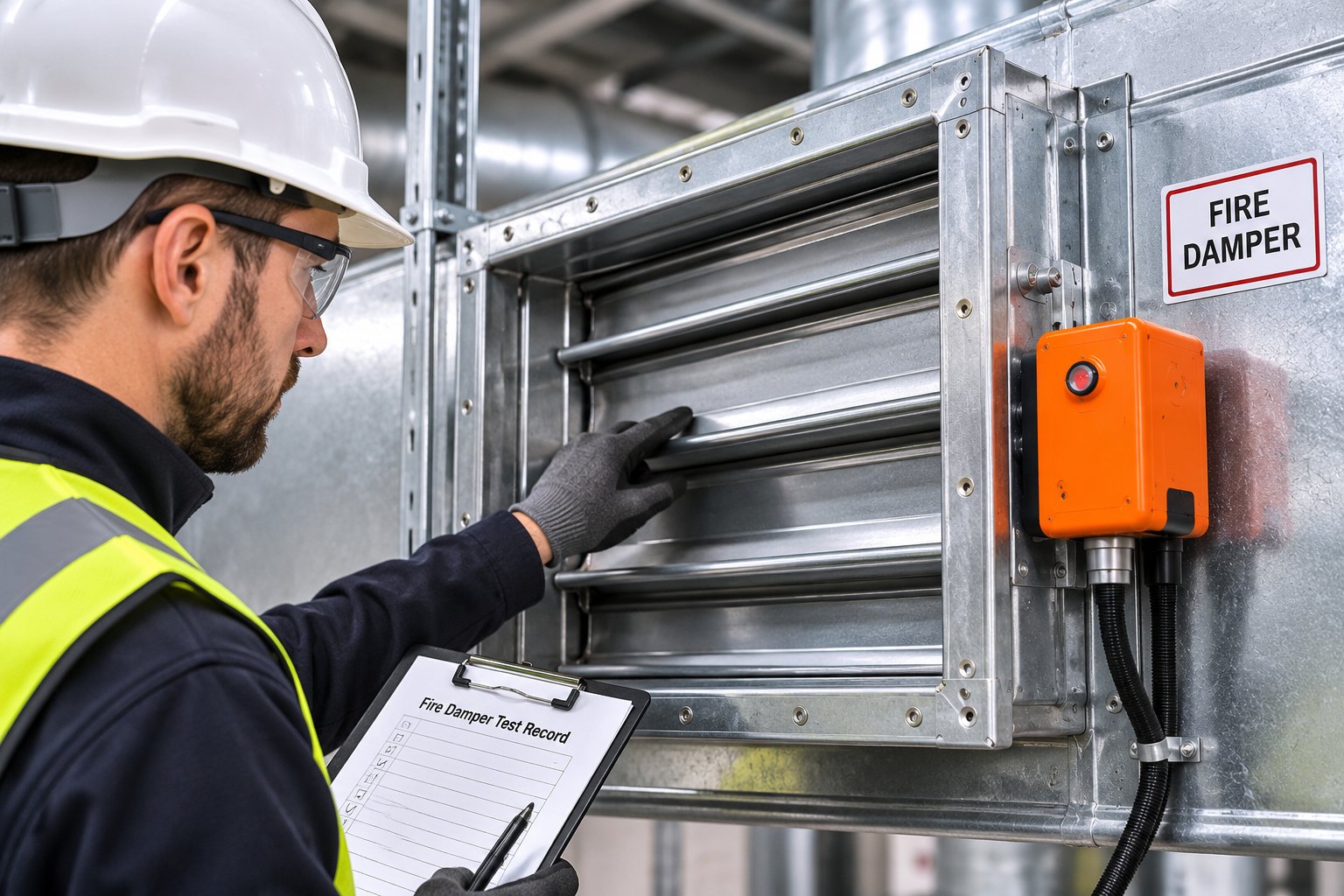
What is a fire damper?
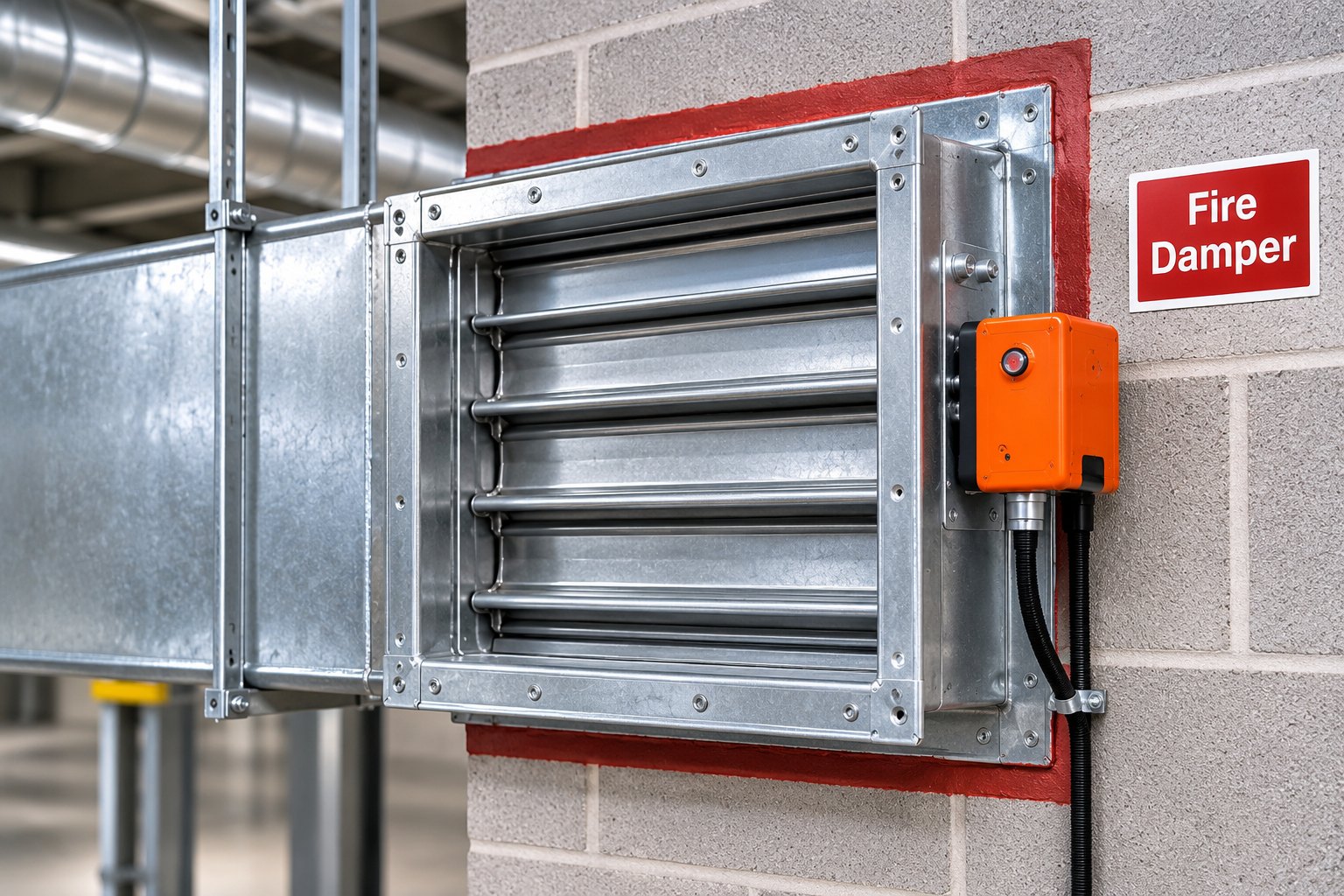
A fire damper is a device installed within ductwork at a fire compartment boundary. During a fire, it closes to help restrict the passage of fire through the duct and preserve the protection provided by the surrounding wall or floor.
Many mechanical fire dampers use a heat-sensitive fusible link to release spring-operated blades or a curtain. Other designs use actuators and controls. Fire dampers, combined fire-and-smoke dampers and smoke-control dampers have different functions: a standard fire damper should not be assumed to provide smoke control. Identification of the installed equipment is an important first step.
Why inspection and testing matter
Dampers are often concealed above ceilings or within service areas. Dirt, corrosion, damage or obstructions can prevent movement without being apparent to building occupants. Installation defects and missing access can also affect whether a damper can be maintained properly.
A visual inspection alone does not establish that a damper will close. Functional testing checks its movement and closure using a method appropriate to its type and manufacturer’s instructions. Inspection also considers visible condition and the surrounding installation, with any limitations recorded.
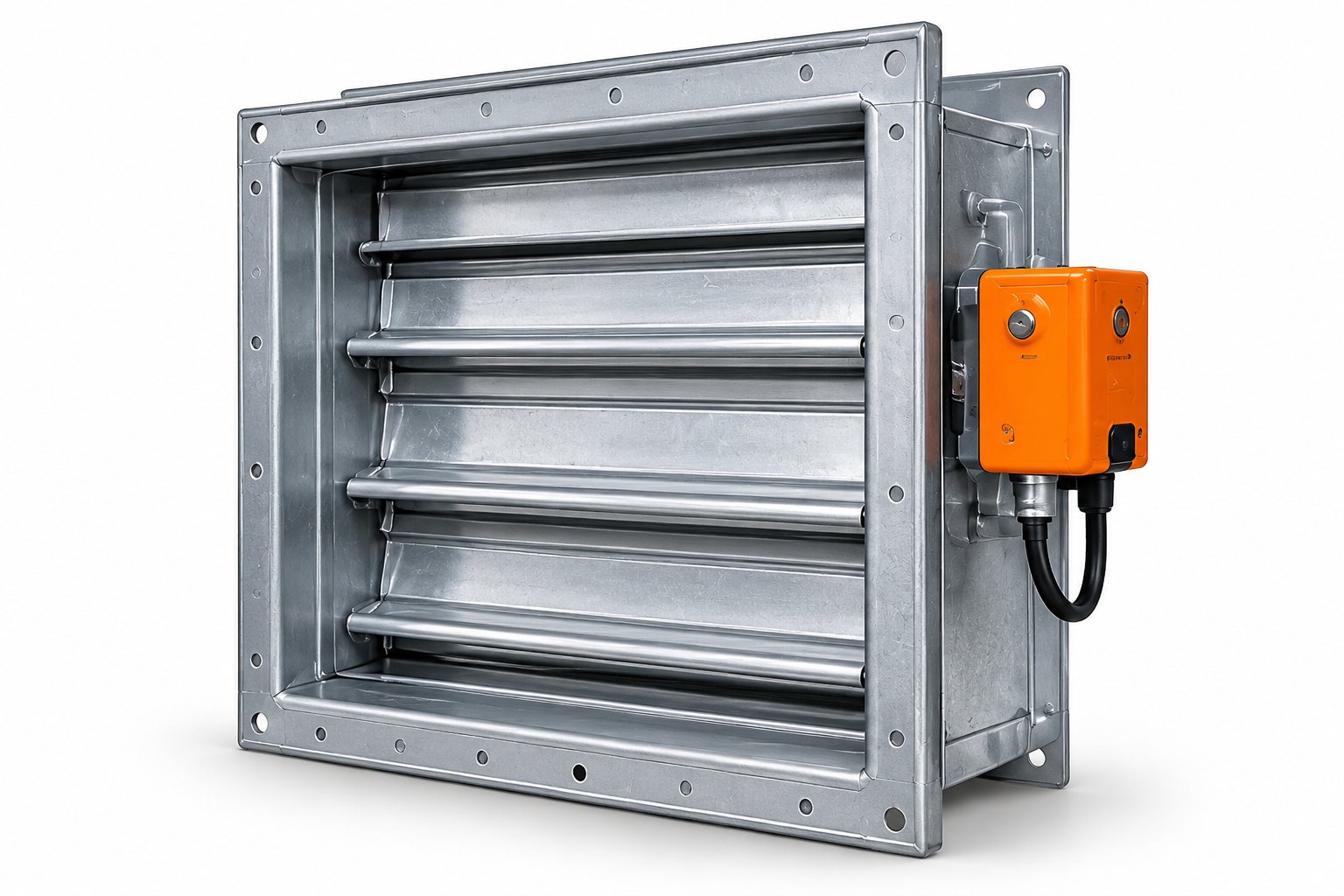
What does fire damper testing typically involve?
The method depends on the equipment and safe access available. A typical inspection and test programme includes:
- Identifying each damper and recording its location and type.
- Checking access and looking for visible damage, debris or obstruction.
- Inspecting accessible release mechanisms, blades and associated components.
- Operating the damper using the appropriate release or control method.
- Checking closure, then resetting it to its normal operating condition.
- Recording results, defects and any further action needed.
For a fusible-link damper, the functional check is commonly called a drop test. Actuated dampers need a suitable test method for their controls and intended operation. Cleaning or adjustments should follow the manufacturer’s requirements; not every mechanism should be lubricated.
How often should fire dampers be tested?
BS 9999 recommends testing by a competent person on completion of installation and at intervals not exceeding one year. Dampers in dust-laden or similar conditions may need more frequent attention, with the interval suited to the conditions. Manufacturer’s instructions, the fire risk assessment and any sector-specific guidance should inform the programme.
The standard is guidance, not a separate Act of Parliament. In England and Wales, Article 17 of the Regulatory Reform (Fire Safety) Order 2005 requires a suitable maintenance system for relevant fire precautions where necessary to safeguard people. The appropriate testing regime supports that duty; an annual test is not a guarantee of overall building compliance.
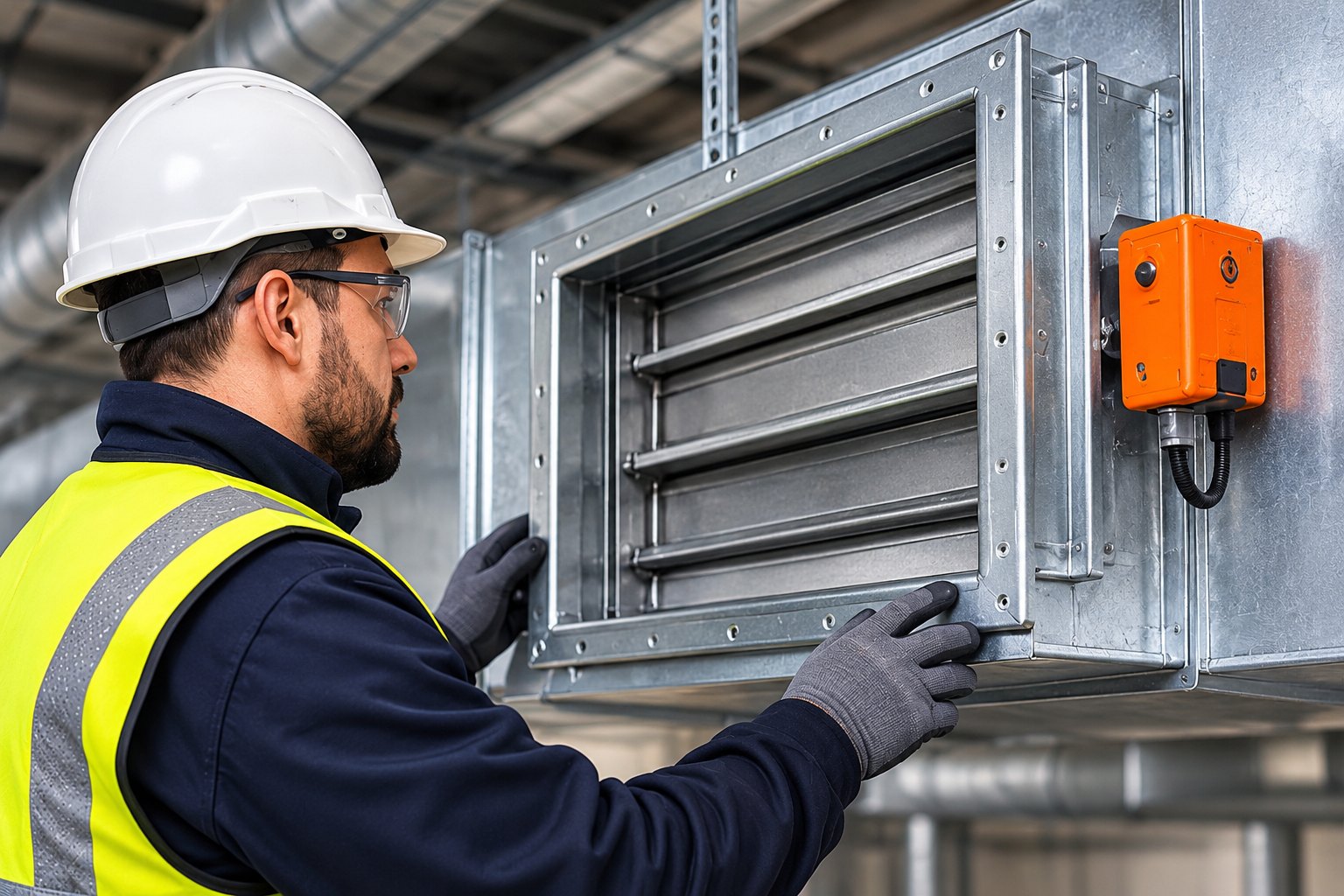
Clear records and follow-up
Useful records connect every result to an identifiable damper. They normally include its location, test date, method, outcome, condition and any defects or access restrictions. Photographs and marked-up drawings can support an accurate asset register.
A damper that cannot be accessed or fully tested should be recorded as such, not treated as a pass. Failed or defective equipment needs prompt assessment and appropriate action, followed by retesting where necessary. A testing visit should leave the responsible person able to distinguish completed checks from unresolved issues.
Frequently asked questions
Discuss testing for your building
Share your building details, available damper register, previous reports and known access issues with Artius Fire Protection. This information helps establish what needs reviewing and the scope to agree before work is arranged.
Call 0203 004 0003 or send an enquiry to discuss your fire damper testing requirements.


