
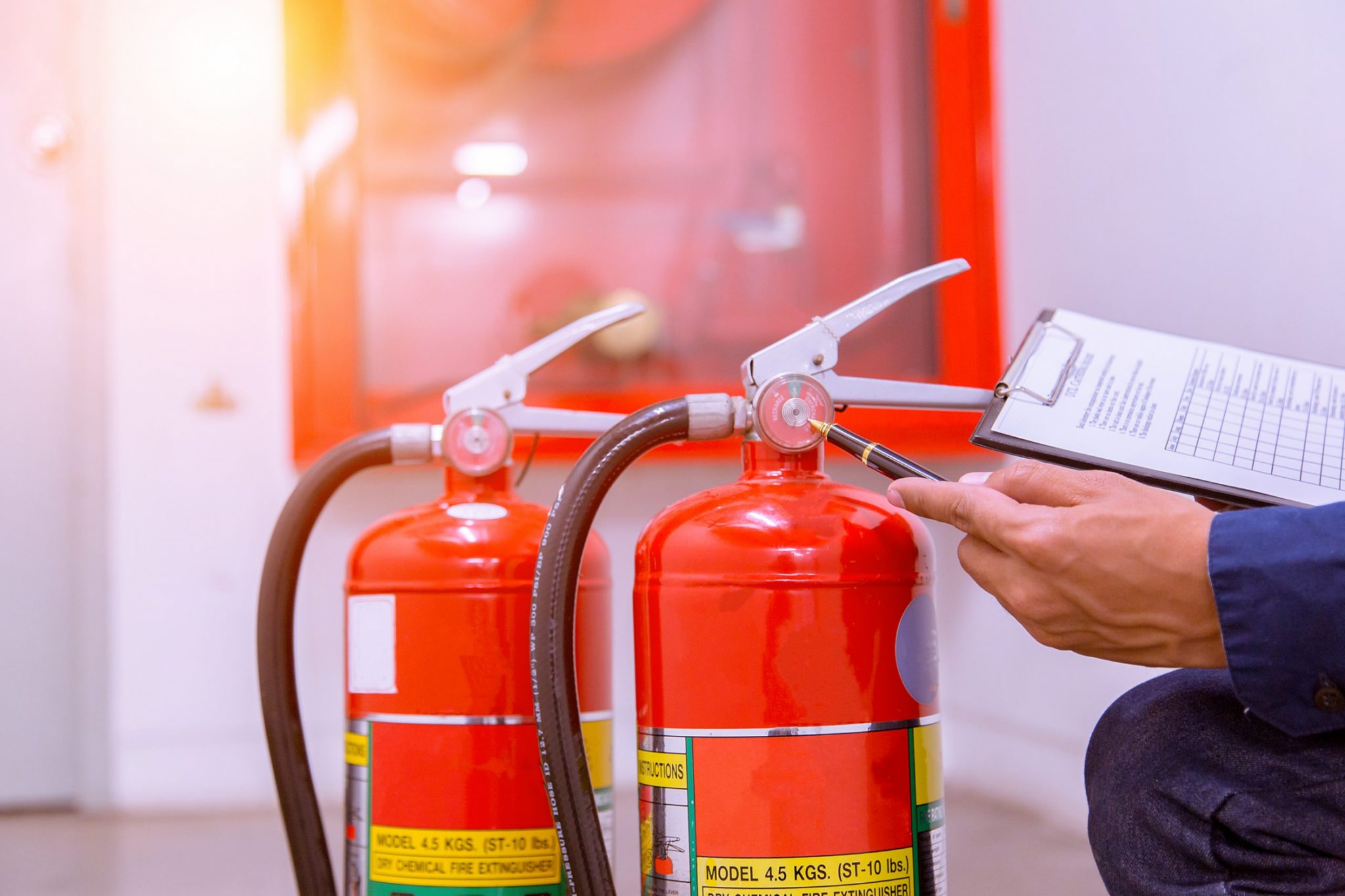
Depending on the type of premises you own, you will need to store different types of fire extinguisher, each classified by the types of fire they put out. The five types of extinguisher include wet chemical, CO2, dry powder, foam and water.
It is crucial that your business or property has the necessary extinguishers available to meet the criteria of fire safety regulations. Water and dry powder extinguishers are subcategorised further meaning there are 8 types in total. No single extinguisher is applicable to every fire therefore it is important that you can tell them apart.
Since each fire extinguisher is classified on the type of fire it puts out, let’s look at the different classes of fire.
What are the different classes of fire?
In total, there are 6 types of fire classes, A, B, C, D, Electrical fires and F.
- Class A – type of fire that have been caused by combustible material such as paper, wood or cloth.
- Class B – fires that have been caused by flammable liquids such as petrol, oil or paints.
- Class C – this fire has been caused by flammable gases such as hydrogen, methane or butane.
- Class D – fires that have been caused by combustible metals such as magnesium, aluminium or titanium.
- Electrical fires – fires that have been caused by electrical equipment such as TVs, PCs or other appliances.
- Class F – fires that have been caused by cooking oils such as grease and fats.

What are the different types of fire extinguisher?
The 5 different types of fire extinguisher are foam, water, dry powder, wet chemical and carbon dioxide. Here we go into detail about each one.
Foam Extinguishers
- Type of fire used to extinguish. Class B is the main use of this extinguisher, however they can also be used on Class A fires due to being water based. It is identified by its cream label.
- What are they used for: Likely to be used for putting out organic materials such as wood and cloth.
- How this extinguisher works. a foam extinguisher cools the fuel that ignited the fire originally and separates the now cooler fuel from the fire itself.
- Where it should be kept. As one of the most common types of fire extinguisher most public buildings such as schools, offices and homes will likely require this type. They are usually kept by the exit of the building.
Water Extinguishers
- Type of fire used to extinguish. Class A is the main use of this extinguisher and it is identified by its bright red label.
- What are they used for. Likely to be used for putting out a range of organic materials such as coal, paper, cloth or cardboard.
- How this extinguisher works. a water extinguisher cools the liquid that has caused the fuel element to burn, this allows the fire to slow down to a rate of extinction.
- Where it should be kept. As the second most common type of fire extinguisher, any building containing wood organic materials should hold one. Most buildings require a water extinguisher or a foam extinguisher above.
Water extinguishers come in 3 forms, either a water jet extinguisher, a water spray extinguisher or a water mist extinguisher. As opposed to a classic jet nozzle, a water spray extinguisher has a spray nozzle. Therefore it is able to cover a wide area of fire.
Whereas a water mist extinguisher releases tiny particles of water helping to keep the user safer from the fire’s heat.
Dry Powder Extinguishers
- Type of fire used to extinguish. Class A, B, C or D can be extinguished with dry powder making it the most versatile. However, it should not be used in an enclosed space. It is identified by its bright blue label.
- What are they used for. Can be used to put out fires from organic materials. As well as fires from flammable liquids and gases.
- Where it should be kept. Anywhere with a large boiler room or welding facilities as well as garage forecourts.
Wet Chemical Extinguishers
- Type of fire used to extinguish. Class F fires involved fats and cooking oils are tackled by this specifically designed extinguisher. It is identified by its bright yellow label.
- How this extinguisher works: a wet chemical extinguisher creates a barrier between the fuel and the fire’s source of oxygen.
- Where it should be kept. Due to the use of a wet chemical extinguisher it is often only needed to be kept in commercial kitchens or canteens.
Carbon Dioxide Extinguishers
- Type of fire used to extinguish. Electrical fires involving the burning of equipment like computers and TVs are put out by this type of extinguisher. They also can put out Class B fires. It is identified by its black label.
- How this extinguisher works: the addition of carbon dioxide means the oxygen needed to keep it burning is dispersed. This means the fire is suffocated.
- Where it should be kept. Often only needed to be kept in settings with electrical equipment such as offices and server rooms.
We hope this highlights how important it is to know your fire classes and their corresponding extinguishers. This knowledge could save you not only a lot of money in property damage but potentially the lives of others.


